Something’s off with your wiring. Maybe a light blinks. Maybe an outlet feels warm. Or maybe a breaker won’t stay on. So you look for an electrical repair service you can trust. Good call. Wiring problems don’t fix themselves. Waiting often makes them worse. Let’s go through what a good fix looks like, and why it matters so much.
Why a Good Electrical Repair Service Matters
Here’s the thing. Electrical problems hide well. A blinking light might seem small. But it can point to something bigger behind the wall. So don’t just shrug it off. Get a second look from someone who knows what to check.
A good electrical repair service does more than patch the one thing you saw. First, they find the root cause. Then, they explain it in plain words, not jargon. Also, they check nearby wires too, since one fault rarely stays alone. Otherwise, you fix one thing and call again next month.
Plus, there’s a safety side here. Bad wiring is a top cause of home fires, per the National Fire Protection Association. So this isn’t just about ease. It’s about keeping your home and your family safe.
What 240V Electrical Repair in NJ Usually Involves
So what happens with bigger power systems? 240V electrical repair in NJ often comes up with large items. Think dryers, ovens, and AC units. These systems carry more power. So mistakes here carry more risk too.
First, a good electrician checks the breaker for that line. Then, they look at the wire for wear, loose spots, or heat marks. Because 240V lines run hot under stress, a small fault can grow fast. So 240V electrical repair in NJ isn’t a job most folks should try alone.
Also, older homes here may have wire that’s just too old for today’s big appliances. In that case, 240V electrical repair in NJ might mean more than a quick fix. It might mean a real upgrade. Either way, a licensed pro should make that call. Not a guess from a video online.
Flickering Lights Repair: What It Usually Means
Flickering lights repair is one of the top calls electricians get. Makes sense. It’s odd. It’s annoying. And it can feel a bit off too. So let’s break down what causes it.
Sometimes the fix is easy. A loose bulb. A worn fixture. But other times, flickering lights repair points to something deeper. Maybe a loose spot at the panel. Maybe a circuit that’s overloaded. If many lights blink at once, most of all when a big appliance turns on, that’s often a sign the circuit can’t keep up.
Meanwhile, blinking with no clear cause deserves a look too. It could mean a spark point somewhere, and that’s a real fire risk. So don’t assume it’s nothing. Get flickering lights repair checked by a pro who can rule out the bad stuff first.
Handling a Faulty 220V Line Repair Service Call
A faulty 220V line repair service call often comes in as urgent. Makes sense, too. These lines often run key gear. When they act up, life stops fast. So what should you expect?
First, the electrician tests the line to find where the fault sits. Then, they check both ends of the line, since loose or worn spots are common. A faulty 220V line repair service call also checks the breaker, since a worn breaker can look like a wire fault and send you the wrong way.
Because these lines carry more power, a faulty 220V line repair service isn’t a solo job. Even skilled DIY folks call a pro for 220V work. Smart move. Better safe than facing a bigger fix, or worse, a real risk, down the road.
Signs You Shouldn’t Ignore
So how do you know when to call someone? A few signs stand out. Warm plugs or switch plates are one. A burnt smell near a plug or panel is another, and that one should not wait. A buzz from a plug or panel also needs a quick look.
Also, watch breakers that trip a lot. One trip now and then isn’t strange, most of all with a busy kitchen line. But if it keeps happening, that’s your system telling you something’s wrong. So don’t just reset it again. Get a real look from a pro.
Dark or stained plugs are another clue folks miss. If a plate looks burnt or yellow, that’s heat harm. And heat harm has a cause.
What to Expect During a Repair Visit
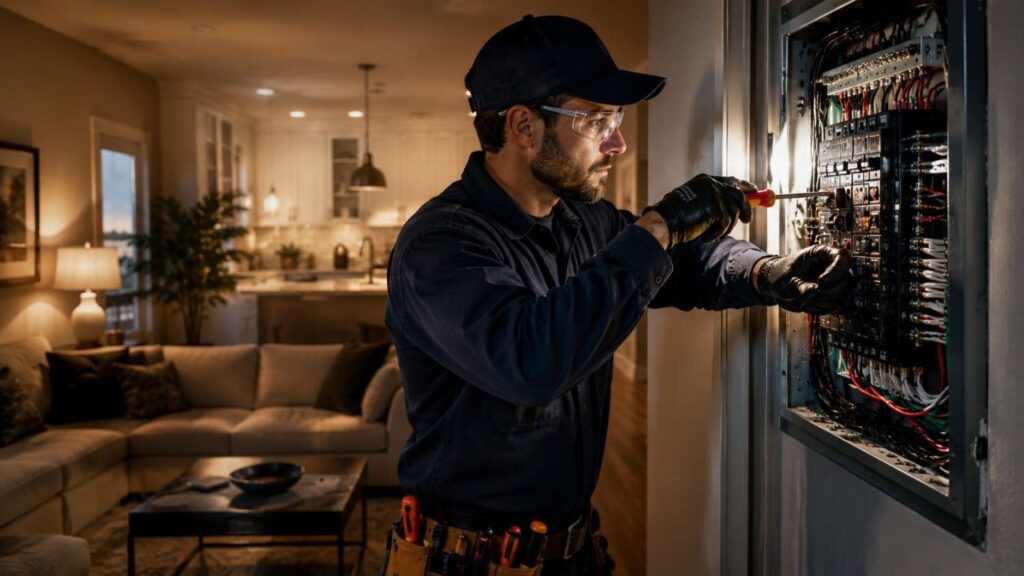
Once you call for help, the steps are simple. First, the electrician asks what you’ve seen. Then, they check the panel, plugs, or wires. Often, they use a few tools to test power and links.
After that, they explain what they found in plain words. A good electrical repair service won’t just hand you a bill and leave. Instead, they walk you through the fix, the cause, and if anything nearby needs care soon too.
Last, they test the fix before the job is done. Small step, but it counts. Nobody wants the same fault back next week.
Frequently Asked Questions
How do I know if I need an electrical repair service or just a quick fix?
If you see blinking, buzzing, warmth, or tripped breakers that keep coming back, get a pro to look. Those signs often mean more than a quick DIY job.
Is 240V electrical repair in NJ pricier than a normal fix?
Often, yes, a bit, since these lines need more care and often touch big items or the panel.
Can flickering lights repair wait a few weeks?
It depends. One bulb blinking now and then can wait. Lots of lights blinking should not, since it may point to a bigger fault.
Why does a faulty 220V line repair service call need a pro?
Because these lines carry high power, a slip can lead to real harm. A licensed pro knows how to fix it right and safely.
Conclusion
At the end of the day, wire faults rarely get better on their own. Be it a stubborn blink or a bigger 240V worry, calling a trusted electrical repair service early saves time, cash, and stress. So if something feels off at home, don’t wait it out. Call a local team you trust, ask what matters to you, and get your home back to safe and sound.